Can You Keep the Fish You Catch in Florida?
October 28, 2026

So, can you keep the fish you catch in Florida? Usually, yes. Before a fish goes in the box, it has to be a species you can legally harvest, in season that day, big enough (or inside the slot), and under the daily count. Some species go back no matter how big they get. That is worth knowing before you book a deep sea fishing trip off Port Canaveral or a Cocoa Beach fishing charter.

On a charter, your captain makes that call at the boat. The answer changes with the species, the date and how far offshore you are, so nobody can promise a yes or no before you leave the dock. On Cape Canaveral fishing charters, the crew sorts it out one fish at a time as each one comes over the rail.

Four Checks Decide Whether a Fish Goes in the Cooler

Every fish gets the same four questions, in the same order.

Is the species open to harvest at all? Some are not, ever, without a special permit. Goliath grouper is the clearest example. Several shark species are fully protected too, including great hammerhead, tiger, lemon and sandbar, which comes up a lot on shark fishing charters.

Is the season open today? Reef species in particular open and close on dates that change year to year.

Does the fish meet the size rule? Sometimes that is a minimum. Other times it is a slot: the fish has to measure between two numbers, and anything shorter or longer goes back.

Are you still under the bag limit? Bag limits count per person. Some species also have a boat limit, and that cap holds no matter how many anglers are aboard.

One detail surprises people. On a for-hire boat, the captain and crew are barred from keeping a bag limit for a long list of species, including mahi, red snapper, gag grouper, snook, redfish and seatrout. The boat’s total take is built from the paying anglers only, not the crew.

Licenses are easy. Fish from a licensed for-hire boat and you are covered. Fin & Fly includes licenses and park permits with every charter, along with everything else listed on the fishing charter prices page.

State Waters and Federal Waters Set Different Limits

Three nautical miles. That is where Florida’s Atlantic state waters end and federal rules take over, and most trips out of Port Canaveral fish both sides of it in a single day.

Mahi shows what that means in practice. In Atlantic state waters the limit is 5 per person. Past the three-mile line it rises to 10 per person, capped at 54 fish for the vessel. Both use the same 20 inch minimum, measured to the fork of the tail.

So the number of mahi you can keep depends on where the boat sat when each fish came aboard. If the two rulebooks disagree, the captain follows the one for the water you are fishing in. It is one reason the crew keeps an eye on the boat’s position all day, not only the depth.
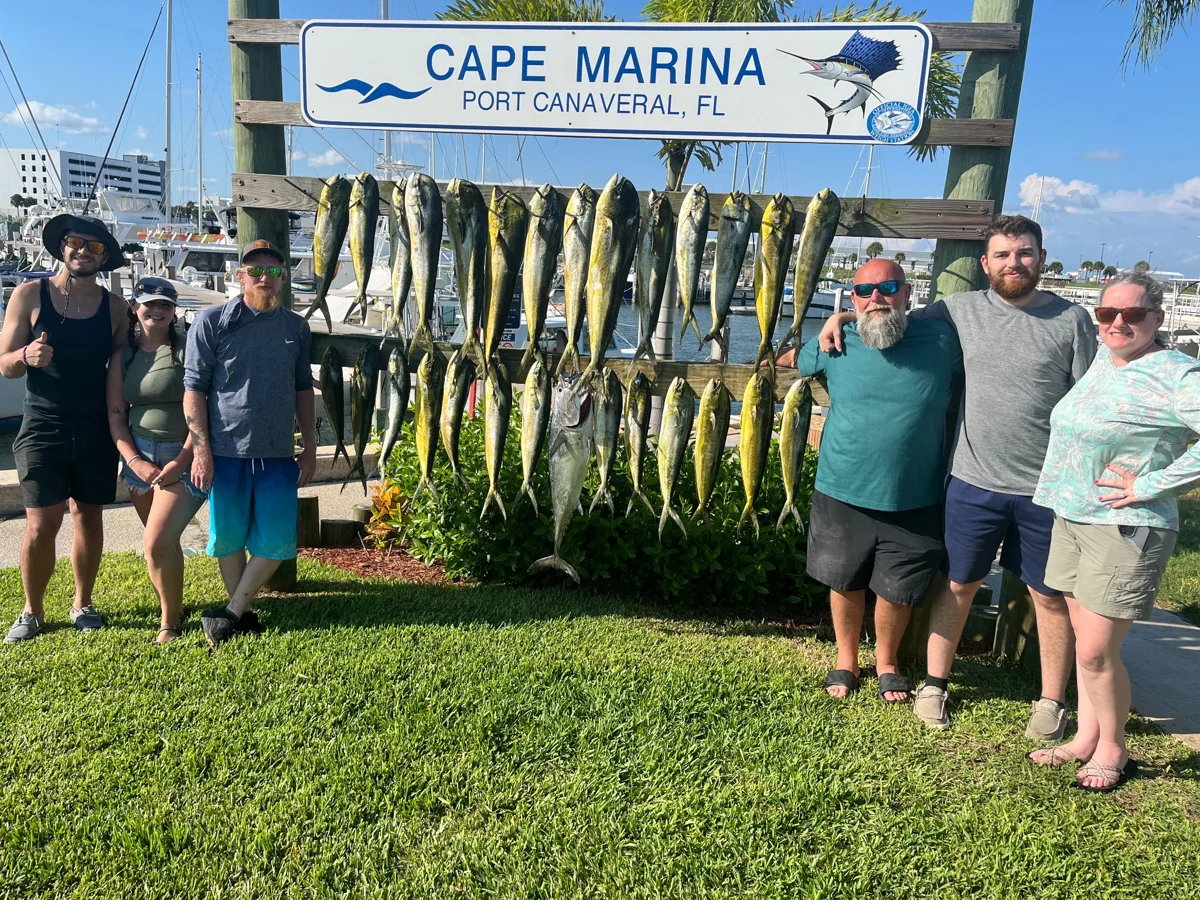
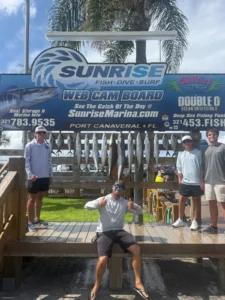
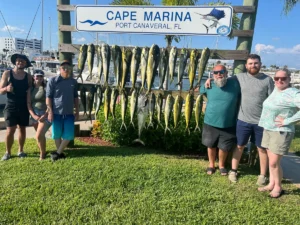
Charter group at Cape Marina in Port Canaveral with a full rack of mahi from an offshore Fin & Fly trip

2026 Size and Bag Limits for Common Space Coast Catches

These are the saltwater fish size limits most Cocoa Beach guests ask about. Measurements use fork length (FL), total length (TL), or lower jaw fork length (LJFL) for billfish.

Species Where Minimum size Daily bag limit Season
Mahi-mahi Atlantic state waters 20″ FL 5 per person, crew none No closed season listed
Mahi-mahi Atlantic federal waters 20″ FL 10 per person, 54 per vessel Open
Wahoo State and federal None 2 per person Open year round
King mackerel Atlantic state waters 24″ FL 2 per person Open year round
Cobia State and federal 36″ FL 1 per person or 2 per vessel, whichever is less Open
Blackfin tuna Florida None 2 per person or 10 per vessel, whichever is greater Open year round
Sailfish State and federal 63″ LJFL 1 billfish per person Open, report within 24 hrs
White / blue marlin State and federal 66″ / 99″ LJFL 1 billfish per person Open, report within 24 hrs
Red snapper Atlantic None 1 per person, crew none Closed (2026 ran Oct 9 to 22)
Vermilion snapper Atlantic 12″ TL 5 per person Open year round
Gray snapper Atlantic 10″ TL state, 12″ TL federal 5 state, 10 federal Open year round
Gag grouper Atlantic 24″ TL 1 gag or black per person, 2 per vessel Closed (reopens May 1)
Red grouper Atlantic 20″ TL Up to 3 per person May 1 to Dec 31
Greater amberjack Atlantic 28″ FL 1 per person Closed April
Goliath grouper All Florida n/a Permit required n/a
Sharks State waters None or 54″ FL by species 1 per person, 2 per vessel Open
Sharks Federal waters 54″ FL, hammerheads 78″ 1 per vessel per trip Open
Redfish Indian River Lagoon n/a Catch and release only n/a
Spotted seatrout Indian River Lagoon 15″ to 19″ TL slot 2 per person Closed Nov 1 to Dec 31
Snook Indian River Lagoon 28″ to 32″ TL slot 1 per person Closed Dec 15 to Jan 31, Jun 1 to Aug 31

Limits checked against FWC’s recreational saltwater regulations on October 28, 2026. FWC changes rules during the year, so confirm with your captain on trip day.
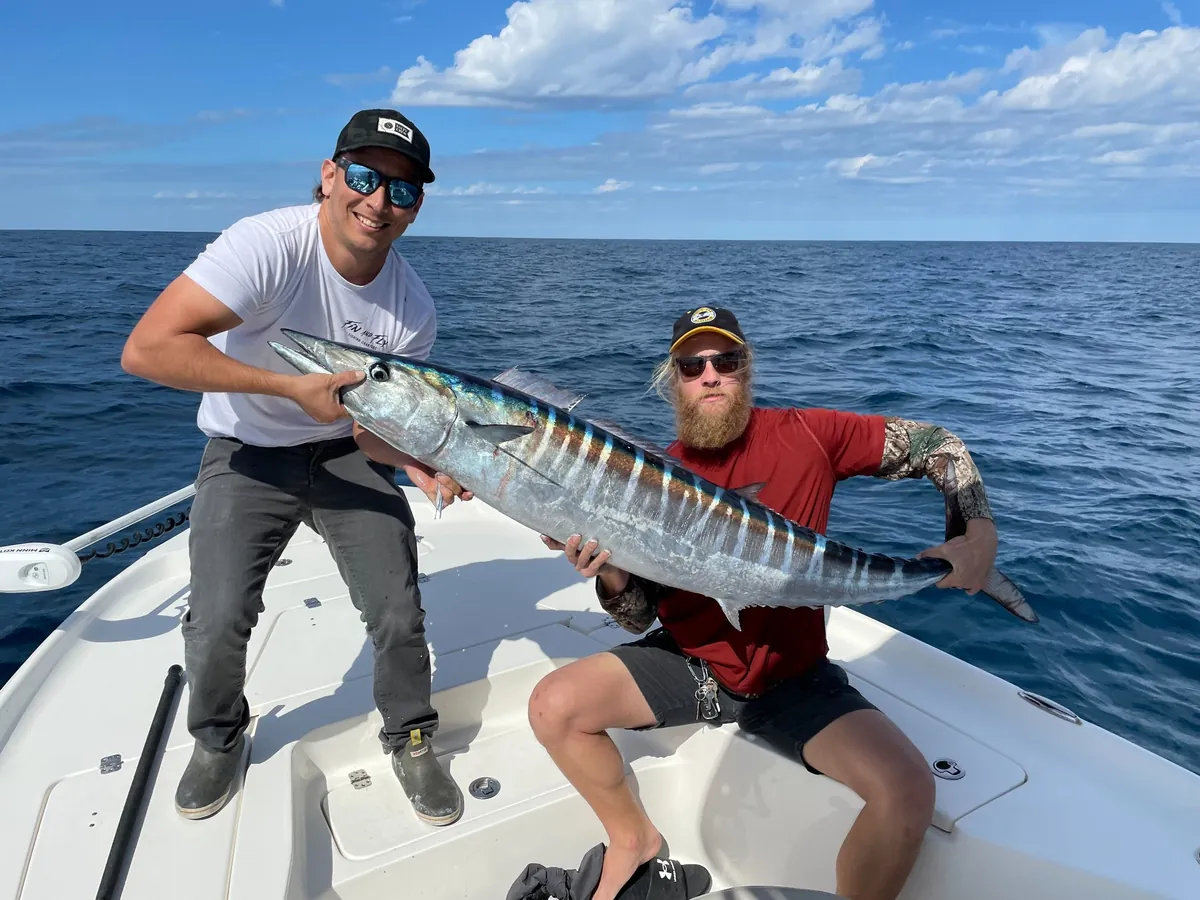
Two anglers holding a wahoo offshore of Cocoa Beach on a Fin & Fly charter; Florida wahoo have no minimum size

Mahi, Wahoo, Kingfish and Other Offshore Fish

Mahi is the fish most guests ask about. The mahi legal size is 20 inches to the fork, and short fish go back. Wahoo has no minimum, just a 2 fish cap, so the wahoo limit is a count, not a tape measure. Kingfish need 24 inches fork length in Atlantic state waters (more on Cocoa Beach king mackerel fishing). Blackfin tuna has no size rule either. Cobia is the strictest of the group at 36 inches, with no more than 2 leaving the boat regardless of how many people are on it. Full details sit on FWC’s dolphinfish page.

Sailfish and Marlin

Legal to keep, technically. The bar is just very high. Sailfish has to reach 63 inches from the lower jaw to the fork, white marlin 66, blue marlin 99, and you are limited to one billfish per person per day. Anything landed must be reported to NOAA within 24 hours. A sailfish you intend to release cannot be lifted from the water in federal waters, which is why you will see crews unhook billfish boatside. Measurements come from FWC’s billfish and tuna page. Off this coast, most billfish get released, not measured.

Red Snapper, Grouper and Other Reef Fish

Red snapper has no standing season. FWC declares a short one each year, with one fish per person, no minimum size, and no retention by captain or crew. The 2026 season ran 14 days, October 9 to 22, and is now closed. Seasons usually last 2 to 14 days, and Fin & Fly runs red snapper trips only while one is open. Watch FWC’s Atlantic red snapper page for next year’s dates, or read more about the 2026 red snapper season in Cocoa Beach.

Grouper is steadier. The grouper size limit is 24 inches total length for gag and black, 20 for red. Gag closed on August 1 for the year, and red is open through December. New Atlantic rules started October 28, 2026: a boat can now keep only two gag or black grouper combined, and for-hire captains and crew keep none. The amberjack size limit is 28 inches fork length, one per person, closed for the month of April. Goliath grouper stays in the water without a permit.

Sharks

State waters allow one shark per person and two per boat. Blacktip, blacknose, finetooth, Atlantic sharpnose and bonnethead have no minimum size. Bull, nurse and spinner need 54 inches fork length. A long list of other sharks is fully protected at any size. Federal waters tighten it to one large shark per boat per trip. Check FWC’s shark regulations for the current species lists.

Fin & Fly shark trips bring up blacktip, spinner, bull, bonnethead, Atlantic sharpnose, blacknose, finetooth, tiger, sand tiger, great hammerhead, scalloped hammerhead, lemon and sandbar sharks. Only the first seven can be kept, and bull and spinner have to measure at least 54 inches fork length. The other six (tiger, sand tiger, both hammerheads, lemon and sandbar) are fully protected in Florida. They stay in the water and get released. For which species swim close to shore, see are there sharks at Cocoa Beach.

Redfish, Trout and Snook in the Lagoon

Cocoa Beach’s lagoons fall inside FWC’s Indian River Lagoon region, and it has its own rules, which matter most on inshore fishing charters. Redfish there is catch and release, full stop. Spotted seatrout sits in a 15 to 19 inch slot at 2 per person, closed through November and December. Snook runs a 28 to 32 inch slot, one per person, with two closed stretches across the year.

Measuring, Releasing and Taking Your Catch Home

An inch decides a lot out here.

Most limits use fork length, measured from the snout to the fork of the tail. Others use total length, snout to the tip of the tail with the lobes squeezed together. Billfish use lower jaw fork length. The crew handles the measuring, on a bump board, before anything goes in the box. FWC’s measurement guide shows the difference.

Mahi and wahoo have one extra rule worth knowing: both have to reach the dock with head and fins still attached. No filleting on the ride in.

Releases happen fast. Prohibited sharks stay in the water and get cut loose at the boat. Reef fish brought up from depth sometimes need a descending device to get back down safely.
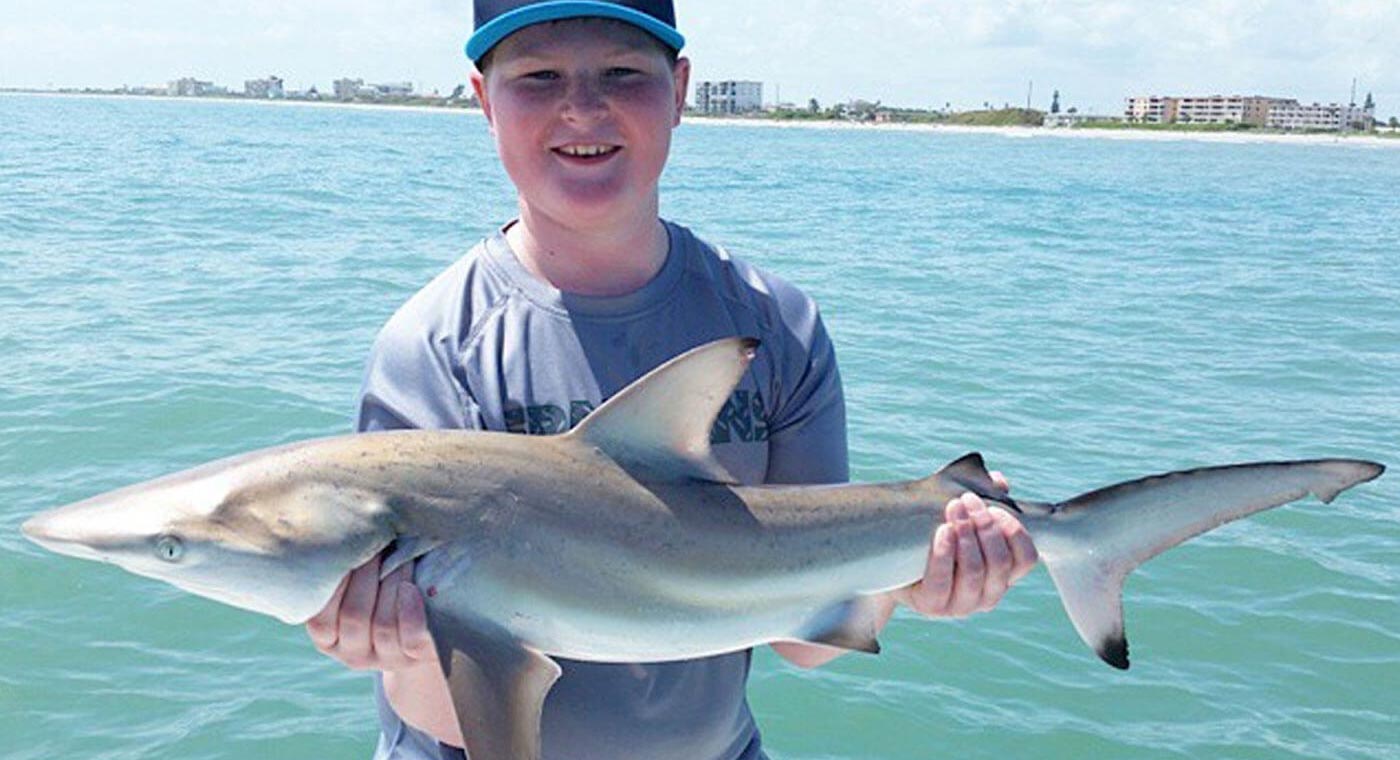
Young angler holding a small shark on a Fin & Fly shark fishing charter off Cocoa Beach

Every Fin & Fly trip includes a cooler with ice and photos of your catch, so legal fish come off the boat packed and ready for the drive. Once you are home, there are simple ways to cook your catch that suit most of what comes off this coast.
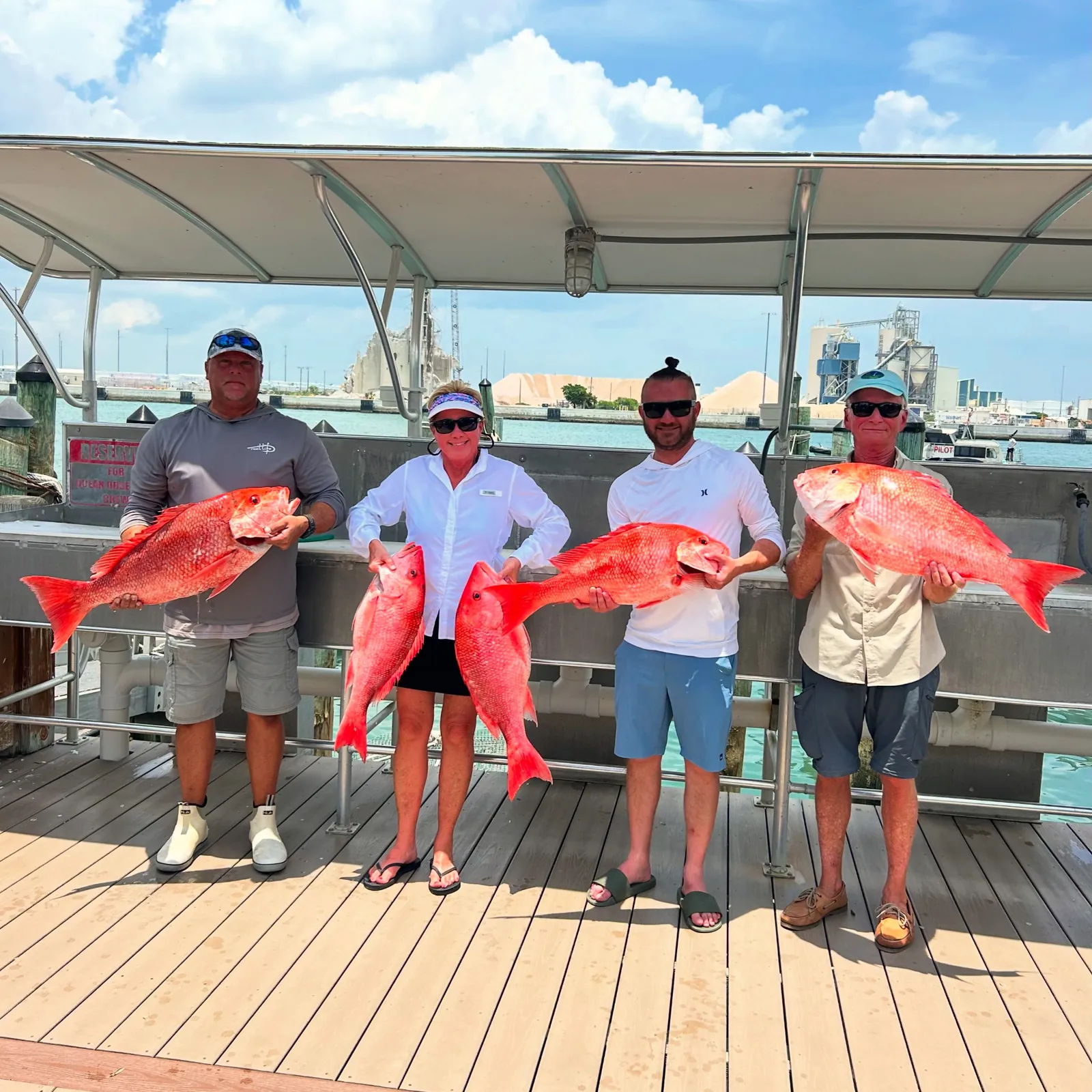
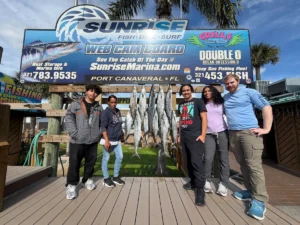
Four anglers holding red snapper on the dock at Port Canaveral after a Fin & Fly red snapper trip

Frequently Asked Questions

What happens if you catch a fish that cannot be kept?

It goes back, usually without leaving the water. The crew unhooks it at the boat and lets it swim off. Prohibited sharks are cut loose fast instead of being hauled aboard for a photo. Reef fish from deep water may go down on a descending device so they can recover.

Who decides whether a fish gets kept or released?

Your captain. The four checks take a few seconds on deck, and the call covers species, date, size and how many of that fish are already in the box. You do not have to keep track of any of it.

Do you need a fishing license to keep fish on a charter?

No. A licensed for-hire vessel covers everyone fishing aboard, and Fin & Fly’s charters include licenses and park permits. Fishing from shore, a pier or your own boat is different. You need your own license for those.

Can you take your catch home on a flight?

Usually, yes. Pack it as checked baggage in a sealed cooler. Each airline has its own packing and weight rules, so call yours before the trip. Plenty of visitors on Orlando fishing charters just drive their catch home.

What should you ask your captain before the trip about keeping fish?

Ask what is in season on your date, whether the crew cleans and fillets, and whether the boat releases anything the law would let you keep. Those three answers tell you what to expect at the dock.

Next Steps for Charter Guests

Pick the two or three species your group wants most, then check whether each season is open on your trip date.

Look up current limits on FWC’s recreational regulations page the week you fish. Reef species can change on short notice.

Ask your captain how the boat handles keeping, cleaning and releasing.

Driving home with fish? Bring a cooler. Still choosing a trip? Compare boats and trip lengths.

Species, season, size and count. Your captain tracks all four, so your day goes to fishing instead of reading rulebooks. Knowing roughly where the limits sit before you board just makes the talk at the dock quicker.
Are There Sharks at Cocoa Beach? What Swimmers and Anglers Should Know

October 5, 2026

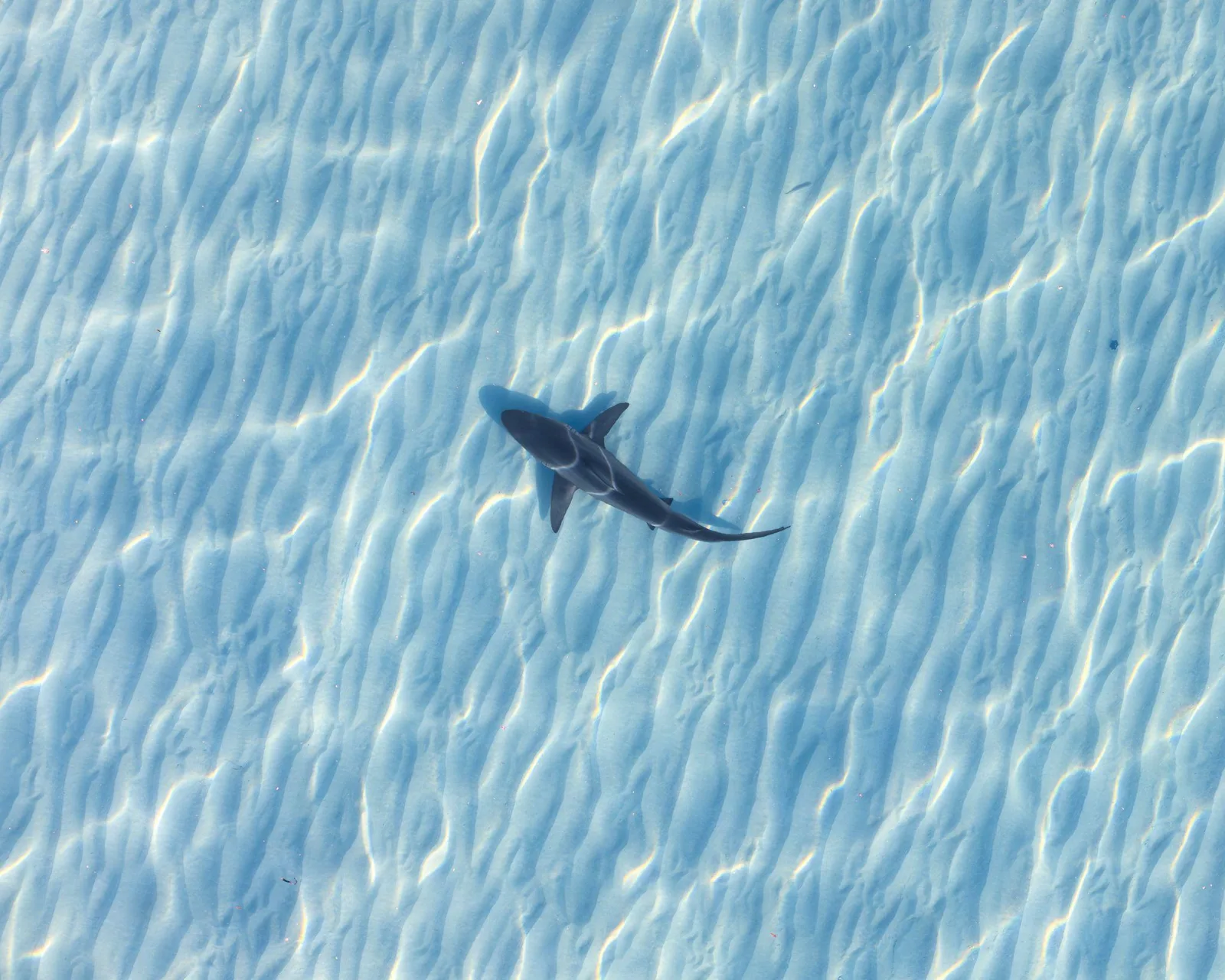
Yes. There are sharks at Cocoa Beach, and there always have been. They live in the surf zone, along the reef edge offshore, and in the brackish water of the Indian River Lagoon. That is true of every beach on Florida’s Atlantic coast, and it is true on calm July mornings as much as during a winter migration.

What matters is not whether they are out there. It is which species, how often anyone actually encounters one, and what conditions bring them closest to people.

Roughly Eighteen Species Share the Water Off Brevard County

Brevard County waters hold around eighteen shark species. The ones you are most likely to be near are small coastal sharks rather than the large predators that dominate headlines.

Blacktip. The most commonly encountered shark off Florida beaches. Blacktips run the Space Coast surf year round and become more abundant once surf temperatures climb past 70 degrees.

Spinner. Frequently mistaken for blacktips and often traveling with them. Spinners grow larger, reach about eight feet, and are known for leaping clear of the water and rotating mid-air when chasing bait.

Atlantic sharpnose. A small coastal species, common and harmless to people.

Bonnethead. A shovel-headed relative of the hammerhead, present year round and more frequent in spring and summer. They feed on crabs, shrimp, and clams.

Bull. Tolerant of brackish water, which puts them in the Indian River Lagoon and other estuaries, particularly after heavy late-summer runoff.

Hammerhead. Larger and less common inshore, more often following bait schools and other sharks.

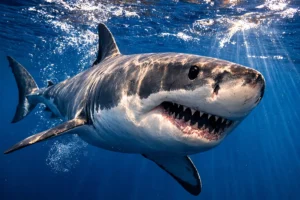
Great whites pass through Florida waters but are an occasional sighting off Brevard rather than a resident species.

Bite Numbers Put the Risk in Perspective

Florida records more unprovoked shark bites than any other state, and the numbers are still small.

In 2025 there were 11 unprovoked bites in all of Florida, which was 44% of the U.S. total and 17% of unprovoked bites worldwide, and lower than Florida’s most recent five-year annual average of 19 incidents. Worldwide the same year saw 65 unprovoked bites, slightly below the ten-year average of 72.

Most of Florida’s share does not happen here. Volusia County recorded six of the state’s 11 bites in 2025, 54% of the total, while the remaining five were split between Broward, Lee, and Miami-Dade counties. Brevard County, where Cocoa Beach sits, recorded none that year.

Across the full historical record, Brevard has logged about 158 confirmed unprovoked bites since 1882. Volusia has logged 366 over the same period.

New Smyrna Beach Carries the Record, Not Cocoa Beach

Search for the Florida beach with the most shark bites and the answer is New Smyrna Beach in Volusia County, roughly 50 miles north of Cocoa Beach.

The reason is a specific combination of conditions: murky water, a high density of surfers and swimmers, and juvenile coastal sharks like blacktips that hunt by spotting movement, which results in bites on people who are usually larger than the shark itself.

Cocoa Beach shares the same species and the same coastline. It does not share the same concentration of incidents.

Shark Activity Peaks in Two Windows Each Year

Sharks follow bait, and bait follows water temperature. That produces a predictable annual rhythm off the Space Coast.

Late summer, August and September. Mullet, anchovies, and herring begin migrating along the east Central Florida coast, and sharks move in behind them. Historically, more Florida bites have occurred in September than any other month.

Winter, December through March. Blacktip and spinner sharks move south along Florida’s Atlantic coast in large numbers, joined by bull and hammerhead sharks following the same schools. The migration begins in December and January, peaks in late January, and continues through February into March, with the sharks remaining until April before heading back north.

Researchers at Florida Atlantic University’s Elasmobranch Research Laboratory describe these migrating sharks as not predatory toward humans, noting that in clear water they are far more likely to simply swim away.

Murky Water Is the Real Variable

Most bites on this coast come down to visibility rather than aggression. A small shark hunting a bait school in cloudy surf is working on movement and vibration. A hand or foot flashing at the edge of that school reads the same as a fish.

Swimmers and waders account for 46% of unprovoked bites and surfers and board sports for 32%. Those are the two activities that put people in the surf zone, in moving water, at the same depth as the bait.

Basic Habits Lower the Odds

The International Shark Attack File publishes guidance for reducing risk. Stay in groups, since sharks are more likely to bite someone alone; avoid wandering far from shore, which isolates you and puts you away from help; and stay out of the water during darkness or twilight, when sharks are most active.

A few more that follow from how these sharks hunt:

  • Skip the water where birds are diving or bait is visibly schooling
  • Leave shiny jewelry on the beach, since it reflects like fish scales
  • Stay out of murky water and out of channels and inlets on a moving tide
  • Do not swim near anyone fishing from a pier or the surf

ISAF’s own assessment is that the risk of being bitten by a shark remains extremely low.

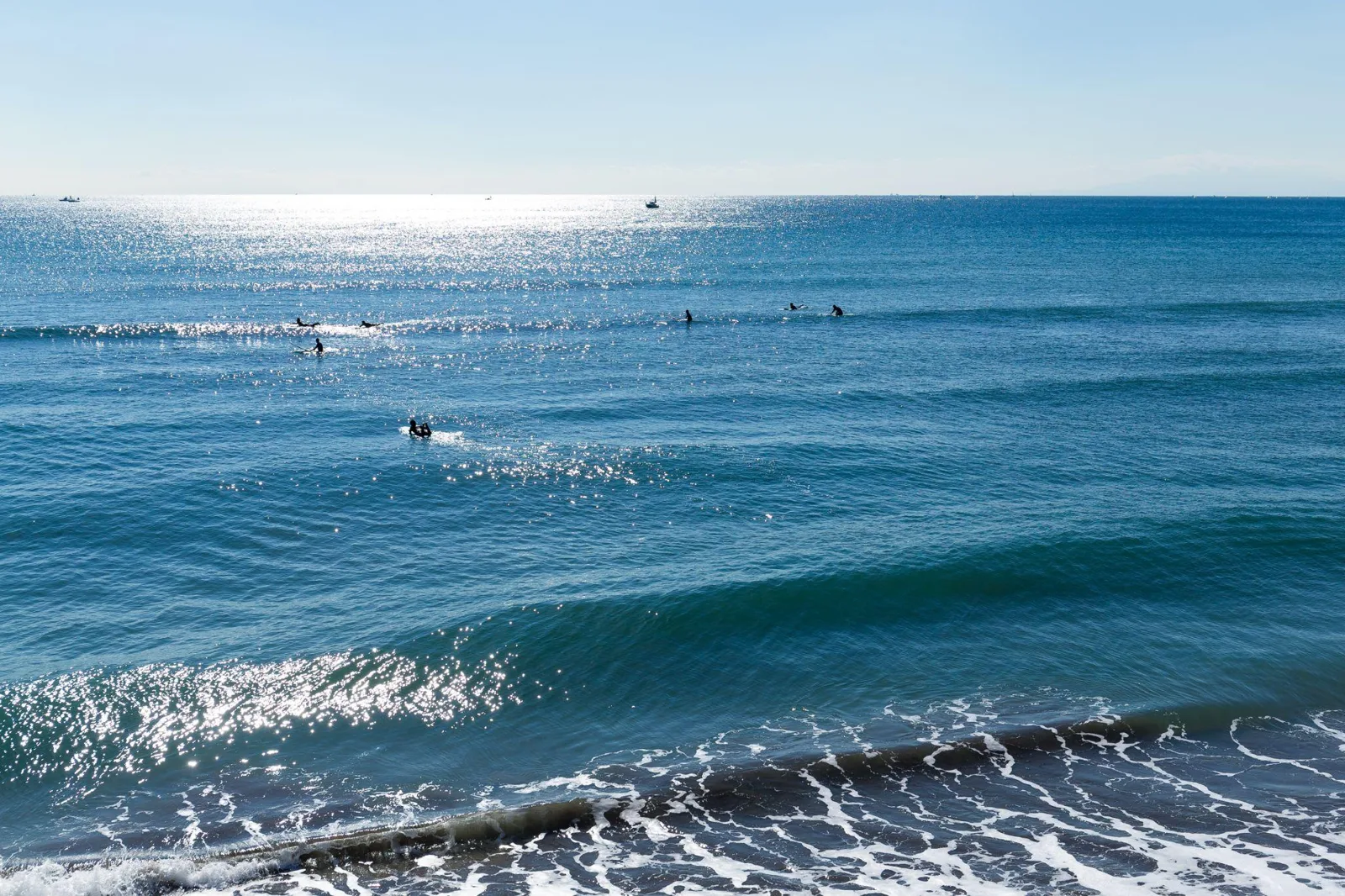
Surfers waiting on their boards past the breakers in clear blue water on a sunny day

Anglers Meet Different Sharks Than Swimmers Do

For anyone fishing this coast, sharks are a target rather than a hazard. The species that show up on a line are often the same ones swimming past the beach, encountered under very different circumstances.

Blacktips take fresh cut bait like ladyfish, mullet, or jack crevalle, and run hard. Spinners put on the aerial display they are named for. Bonnetheads fight above their weight on light tackle. Further offshore, larger coastal and pelagic sharks hold near wrecks and reef structure.

Local operators run trips targeting them out of Port Canaveral and the surrounding inlets. Fin & Fly covers this in more detail on its shark fishing charters page, and offshore trips out of the same port are described on the deep sea fishing charters and Cape Canaveral fishing charters pages. Lagoon species and the brackish water where bull sharks range are covered on the inshore fishing charters page.

Frequently Asked Questions

Are there sharks at Cocoa Beach right now?

Almost certainly. Blacktips and other small coastal species are present in Space Coast surf year round, with numbers rising when water temperatures pass 70 degrees. Their presence is constant; encounters with people are not.

How many shark attacks have there been at Cocoa Beach?

Brevard County has recorded about 158 confirmed unprovoked bites since 1882, spread across the entire county and more than 140 years. The county recorded none in 2025.

What beach in Florida has the most shark attacks?

New Smyrna Beach in Volusia County. Volusia has logged 366 confirmed unprovoked bites since 1882, far more than any other Florida county, and it accounted for more than half of Florida’s bites in 2025 with six.

What types of sharks are in Florida?

Florida waters hold dozens of species. The most commonly encountered near beaches are blacktip, spinner, Atlantic sharpnose, and bonnethead. Bull, tiger, lemon, nurse, and hammerhead sharks are also present, with distribution varying by region and season.

Are there great white sharks in Florida?

Yes, though they are visitors rather than residents. Great whites move into Florida waters during cooler months and are tracked along the Atlantic coast each winter. Sightings off Brevard County are occasional and typically well offshore.

When do sharks migrate in Florida?

The main Atlantic coast migration runs from December and January through March, peaking in late January, with sharks heading back north in April. A second concentration occurs in August and September, when bait fish move along the east Central Florida coast.

How common are shark bites in Florida?

Uncommon. Florida recorded 11 unprovoked bites in 2025, below its five-year annual average of 19. Worldwide the figure was 65, against a ten-year average of 72.

What should you do if you see a shark while swimming?

Stay calm and leave the water steadily rather than thrashing. Keep the shark in view as you go, and move toward a group of people rather than away from shore.

Sources

Cocoa Beach Fishing Report July 2026

Cocoa Beach Fishing Report July 2026

July 21, 2026

The Cocoa Beach fishing report for July 2026 is showing strong, varied action both offshore and nearshore of Port Canaveral. Anglers joining our Cocoa Beach fishing charters this month are putting together a mixed bag on the deep sea trips, while nearshore and beach anglers are staying busy with a completely different lineup of species. Here’s a rundown of what’s been biting.

Cocoa Beach Fishing Report July 2026 – Deep Sea Highlights

Offshore, kingfish have been one of the most consistent producers this month, showing up steadily on both half-day and full-day charters. Alongside them, our anglers are catching a solid mix of reef and bottom species, including:

  • Lane snapper
  • Triggerfish
  • Amberjack
  • Grouper (when in season)
  • Cobia, on occasion

Mahi-mahi have also been coming aboard on some of our full-day offshore runs, though the bite has been more sporadic than a typical peak-summer push. Anglers chasing mahi specifically should book a full-day trip to give the boat time to reach the weed lines and current edges where they’re holding. For a full breakdown of when mahi and sailfish run heaviest off Cocoa Beach, see our Best Time to Fish Offshore Cocoa Beach guide.

A note on red snapper: anglers are still encountering red snapper on the reefs and wrecks offshore, but recreational harvest remains closed following the sudden South Atlantic red snapper season closure in May. Any red snapper caught this month are being carefully released, as required while the federal closure remains in effect.

Anglers targeting reef species should also make sure they’re registered with the State Reef Fish Angler program through GoOutdoorsFlorida.com before heading out.

Cocoa Beach Fishing Report July 2026 – Nearshore Highlights Around the Port

Nearshore and around Port Canaveral, the bite has looked quite different from the deep sea trips. Mangrove snapper have been the most reliable target right around the port, with anglers also picking up:

  • Flounder
  • Jack crevalle
  • Spanish mackerel
  • Ladyfish
  • An occasional snook

It’s shaping up to be a good month for anglers who want a lighter-tackle, fast-action trip closer to shore rather than a long run offshore.

Shark Fishing Along the Beaches

Shark fishing has stayed productive right along the beaches this month, with our shark charters continuing to put anglers on fish close to shore. It’s one of the most exciting ways to experience Florida’s Space Coast without needing to run offshore, and July’s warm water is keeping the action steady.

Looking Ahead

This Cocoa Beach fishing report shows warm water holding through the rest of the summer, so expect the offshore mix of kingfish, snapper, and mahi to continue, alongside steady nearshore and shark action close to the beach. Every trip is a little different, and this time of year tends to bring some of the widest variety of species we see all season.

Book a Cocoa Beach Fishing Charter

If you’re planning a fishing trip on Florida’s Space Coast, now is a great time to get out on the water. Whether you’re after a full-day offshore run for kingfish and mahi, a nearshore trip for snapper and Spanish mackerel, or a shark fishing charter along the beach, we’ve got a trip that fits. Check out our current charter pricing and book your Cocoa Beach fishing charter today!

Cocoa Beach fishing report July featuring a successful offshore fishing
Another great July offshore fishing trip with Fin & Fly Charters out of Cocoa Beach and Port Canaveral.

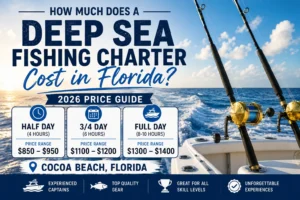
How Much Does a Deep Sea Fishing Charter Cost in Florida? (2026 Price Guide)

How Much Does a Deep Sea Fishing Charter Cost in Florida? (2026 Price Guide)

July 19, 2026

If you’re planning a deep sea fishing trip on Florida’s coast, one of the first questions on your mind is probably simple: what’s the deep sea fishing cost going to be? The honest answer is that it depends on a handful of factors — trip length, boat type, group size, and what’s included in your package. This guide breaks down exactly what drives deep sea fishing cost so you can budget with confidence before you book with Fin & Fly Charters.

What Affects Deep Sea Fishing Cost in Florida

Trip length is the single biggest factor in deep sea fishing cost. A half-day trip of around five hours will always cost less than a full-day or extended offshore trip, since a longer charter uses more fuel, more crew time, and covers more distance to reach productive fishing grounds.

Trip type also plays a role. Charters that run farther offshore to reach bluewater species use more fuel and time on the water than a shorter nearshore trip, which can affect the total cost.

Group size changes the math on private charters specifically. Because the total charter fee is usually fixed regardless of how many people you bring, up to the boat’s capacity, a larger group can significantly lower the cost per angler.

Unlike many charters, Fin & Fly keeps pricing flat year-round, so you won’t pay a peak-season premium. The rate you see when you book is the rate you pay, whether it’s the middle of summer or the dead of winter.

Typical Deep Sea Fishing Cost by Trip Type

  • Half-day charter (5 hours): $850–$950 total
  • 3/4-day charter (7 hours): $1,100–$1,200 total
  • Full-day charter (9 hours): $1,300–$1,400 total

What’s Included in Your Fin & Fly Charter

Most reputable Florida charters include the boat, captain, crew, fuel, and basic fishing gear in the base deep sea fishing cost. What often costs extra includes your fishing license, unless the charter covers it, food and drinks, fish cleaning and bagging, and gratuity for the crew. At Fin & Fly, our charters include fishing licenses, rods, reels, bait, and tackle, so you’ll know exactly what’s covered before you step on the boat.

Don’t Forget to Budget for Tipping

As with most guided outdoor experiences, tipping your captain and mate is customary when they’ve worked hard to put you on fish. A good rule of thumb is fifteen to twenty percent of the total charter cost, split among the crew, though this can flex based on service and how the trip goes.

Tips for Getting the Best Value on Your Florida Fishing Charter

Since Fin & Fly’s rates stay the same year-round, you don’t need to chase an off-season discount — you can book whenever it’s convenient without worrying about paying a peak-season premium. Because every trip is a private charter, the best way to maximize value is to bring a full group: the total cost is fixed regardless of how many anglers you bring, so filling the boat brings your per-person cost down considerably. Booking directly with Fin & Fly, rather than through a third-party marketplace, also means better pricing since you’re not paying an added booking fee on top of the charter cost.

Frequently Asked Questions About Deep Sea Fishing Cost

Do I need a fishing license?

In most cases, a charter’s fishing license covers everyone on board, but it’s always worth confirming when you book. You can check current requirements through the Florida Fish and Wildlife Conservation Commission.

What should I bring on my trip?

Sunscreen, sunglasses, non-slip shoes, and a light jacket are all smart additions to your day, along with motion sickness remedies if you’re prone to seasickness.

Ready to Book Your Florida Deep Sea Fishing Trip?

At Fin & Fly Charters, we believe in transparent, upfront pricing with no hidden fees. Contact us today to check availability and lock in your date for an unforgettable deep sea fishing experience.

How Much Does a Deep Sea Fishing Charter Cost in Florida? 2026 Price Guide
Average prices for half-day, 3/4-day, and full-day deep sea fishing charters in Cocoa Beach, Florida.

South Atlantic Red Snapper Season Closed Night Before Opening Day

South Atlantic Red Snapper Season Closed Night Before Opening Day

May 22, 2026

South Atlantic Red Snapper Season Closed the Night Before Opening Day

The South Atlantic red snapper season closed unexpectedly on May 21, 2026 to recreational anglers across Florida and the South Atlantic Thursday after NOAA Fisheries announced that the 2026 recreational red snapper season in federal waters has been halted effective immediately.

The closure came less than 24 hours before Florida\u2019s planned May 22, 2026 opening day, leaving thousands of anglers, charter captains, and coastal businesses scrambling after months of preparation.

According to NOAA Fisheries, a federal court ruling issued by the United States District Court for the District of Columbia granted a preliminary injunction that suspends the exempted fishing permits (EFPs) used to authorize the 2026 state-managed recreational red snapper seasons in the South Atlantic.

As a result, recreational South Atlantic red snapper season closed.

Why the South Atlantic Red Snapper Season Closed Suddenly

The closure stems from a lawsuit challenging the South Atlantic exempted fishing permit program that allowed Florida, Georgia, South Carolina, and North Carolina to operate their own recreational red snapper seasons in federal waters.

NOAA Fisheries stated:

\u201cAll recreational fishing under these South Atlantic EFPs is not authorized, including tomorrow\u2019s start date of May 22, 2026, for Florida\u2019s recreational red snapper season.\u201d

This means anglers targeting red snapper in federal waters off Florida\u2019s Atlantic Coast can no longer legally harvest the species until further notice.

The ruling only impacts the recreational season under the EFP program. NOAA confirmed that the future South Atlantic commercial red snapper season is not affected at this time.

Why This Red Snapper Closure Is Frustrating Anglers

The timing of the announcement has created major frustration throughout Florida\u2019s fishing community.

Many anglers already booked hotels, purchased fuel, loaded bait, and scheduled offshore trips for opening weekend. Charter captains across ports including Port Canaveral, Cocoa Beach, and other Atlantic coastal communities were preparing for one of the most anticipated fishing weekends of the year.

Instead, the season was canceled the night before opening day.

For many fishermen, the closure is especially frustrating because South Atlantic red snapper populations are widely viewed as healthy and abundant. Anglers regularly report seeing large schools of red snapper while bottom fishing offshore reefs and wrecks.

Is Red Snapper Fishing Completely Closed?

At this time:

  • Recreational harvest of South Atlantic red snapper season closed.
  • The South Atlantic exempted fishing permits are suspended until further court action.
  • NOAA Fisheries may still announce a separate 2026 federal recreational season later this year.
  • Commercial red snapper regulations are unchanged for now.

Anglers should continue monitoring official updates from Noaa Fisheries and state wildlife agencies for additional announcements.

What This Means for Florida Offshore Fishing Charters

While the sudden closure is disappointing, offshore fishing along Florida\u2019s Space Coast remains excellent heading into summer.

Many charter boats targeting red snapper will now shift focus toward other popular offshore species including:

  • Mahi-mahi
  • Kingfish
  • Cobia
  • Amberjack
  • Vermilion snapper
  • Grouper (season dependent)
  • Sharks
  • Blackfin tuna (seasonal)

Fishing on a Cocoa Beach Fishing Charter can still provide excellent action even without a recreational red snapper season.

Will There Be a 2026 South Atlantic Red Snapper Season?

Right now, there is no confirmed federal recreational red snapper season for 2026 in the South Atlantic.

NOAA Fisheries stated they will announce future updates regarding any possible federal recreational season as more information becomes available.

For now, anglers hoping to keep Atlantic red snapper will have to wait for additional court decisions or federal announcements.

Final Thoughts on the Sudden Red Snapper Closure

The abrupt cancellation of the 2026 South Atlantic recreational red snapper season highlights the ongoing legal and political battles surrounding fisheries management on the Atlantic Coast.

For Florida anglers and charter captains, the decision is a major disappointment \u2014 especially considering the announcement came just hours before opening day.

Until further notice, recreational harvest of red snapper in South Atlantic federal waters remains closed.

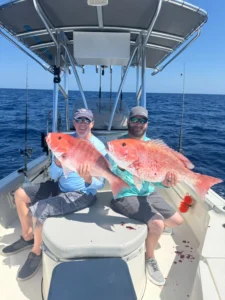
Anglers holding large red snapper offshore during the South Atlantic red snapper season closure
Offshore anglers with trophy red snapper before the sudden South Atlantic red snapper season closure in 2026

Cocoa Beach Fishing Report March 2026

Cocoa Beach Fishing Report March 2026

March 13, 2026

Cocoa Beach Fishing Report March 2026

The Cocoa Beach fishing report March 2026 is already showing excellent action offshore and nearshore of Port Canaveral. Anglers joining our Cocoa Beach fishing charters\u00a0are seeing a wide variety of species including mahi-mahi offshore, sharks nearshore, and reef fish like snapper and triggerfish on local reefs.


Cocoa Beach Fishing Report Video \u2013 Redfish Catch

We recently filmed our March Cocoa Beach fishing report video, where we hooked into a nice redfish while fishing the local waters.

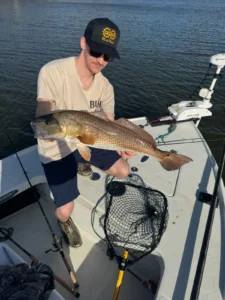
Redfish caught during Cocoa Beach fishing charter March 2026
Redfish caught near Cocoa Beach during a March fishing charter

Redfish have been showing up around the lagoons and nearshore areas, giving anglers a great opportunity for light tackle action this time of year.


Cocoa Beach Fishing Report March 2026 \u2013 Shark Fishing Heating Up Nearshore

Shark fishing has been especially good lately with several species showing up close to shore. Our Florida shark fishing charters\u00a0have been producing steady action on recent trips.

Several species of sharks have been active close to the beaches. Spring is a great time for shark fishing along Florida\u2019s east coast as water temperatures begin to warm and baitfish move closer to shore.


Offshore Mahi-Mahi Bite on Full-Day Trips

For anglers heading farther offshore on full-day fishing charters, the mahi-mahi bite has been very good.

These colorful offshore fish are being caught around floating debris, weed lines, and bait pods as they begin moving into the area. Mahi-mahi fishing typically improves throughout the spring, and March is often when the first consistent catches start to show up offshore of Cocoa Beach.


Snapper and Reef Fish Action

Reef fishing has also been productive on both half-day and full-day charters.

Anglers have been catching a mix of:

  • Red snapper

  • Lane snapper

  • Triggerfish

  • Kingfish

These species are being caught on the reefs and wrecks offshore of Cape Canaveral, providing steady action for anglers.

Anyone targeting reef species in Florida should make sure they are registered with the State Reef Fish Angler program through GoOutdoorsFlorida.com.


Cobia Sightings Around Manta Rays and Bait Pods

Another exciting development in the March Cocoa Beach fishing report has been the appearance of cobia.

Several manta rays have been spotted offshore with cobia swimming alongside them, which is a classic spring pattern along the Space Coast. A few cobia have also been caught around bait pods moving through the area.

Cobia fishing often improves throughout March and April as these fish migrate along Florida\u2019s Atlantic coast.


Spring Fishing Heating Up on the Space Coast

With warmer water temperatures arriving, fishing along the Cocoa Beach and Port Canaveral area is only expected to get better in the coming weeks.

Whether anglers are targeting:

  • Redfish

  • Sharks

  • Snapper

  • Mahi-mahi

  • Cobia

There are plenty of opportunities for a great day on the water.


Book a Cocoa Beach Fishing Charter

If you\u2019re planning a fishing trip on Florida\u2019s Space Coast, now is a great time to get out on the water.

Fishing charters departing from Port Canaveral near Cocoa Beach are currently seeing a wide variety of species and exciting action both nearshore and offshore.

Every trip is different, and spring fishing can bring some of the most exciting opportunities of the year.

Book your Cocoa Beach Fishing Charter today!

Great White Shark Spotted Offshore Cocoa Beach (3 Sightings)

Great White Shark Spotted Offshore Cocoa Beach (3 Sightings)

March 11, 2026

Great White Shark Spotted Offshore Cocoa Beach (3 Sightings in 3 Days)

Great white shark spotted offshore Cocoa Beach during deep sea fishing charter
Great white shark swimming offshore of Cocoa Beach near Port Canaveral.

An incredible series of great white shark sightings offshore of Cocoa Beach and Cape Canaveral has anglers across Florida talking this week.

During a deep sea fishing charter offshore of Port Canaveral, Captain John Lau aboard the Game Changer encountered a massive great white shark cruising near the boat.

Even more surprising, this sighting marks three confirmed great white shark encounters in just three days along Florida\u2019s Space Coast.


Great White Shark Spotted Offshore Cocoa Beach by Captain John Lau

On March 10th, 2026, while running a deep sea fishing charter offshore of Cocoa Beach, Captain John Lau spotted a great white shark swimming near the boat.

Great white sharks rarely appear during fishing charters in this area, making the encounter an unforgettable moment for everyone onboard.

Below is the video of the shark filmed offshore of Port Canaveral.


Blair Wiggins Encounters 15-Foot Great White

Just days before Captain John Lau\u2019s sighting, well-known angler Blair Wiggins also encountered a massive 15-foot great white shark while fishing offshore.

That sighting occurred this past Sunday and quickly spread through the fishing community.

With both encounters combined, that makes three great white shark sightings in three days off the waters near Cocoa Beach and Cape Canaveral.


Blair Wiggins encounters a massive great white shark offshore of Florida.


Why Great White Sharks Appear Off Cocoa Beach

Although rare, great white sharks do migrate along Florida\u2019s Atlantic coastline.

Several factors can bring them near the waters offshore of Port Canaveral:

  • Seasonal baitfish migrations

  • Cooler offshore water temperatures

  • Natural great white migration along the East Coast

  • Deep water close to shore along the Gulf Stream

Because the Gulf Stream flows relatively close to the Space Coast, large pelagic predators occasionally pass through the area.


Deep Sea Fishing Offshore of Cape Canaveral

The waters offshore of Cocoa Beach and Cape Canaveral are known for incredible offshore fishing.

Depending on the season, anglers regularly encounter species like:

  • Mahi-mahi

  • Sailfish

  • Kingfish

  • Grouper

  • Blackfin tuna

  • Sharks

And every once in a while, something truly rare like a great white shark cruising past the boat.


Book a Cocoa Beach Deep Sea Fishing Charter

If you want to experience the excitement of offshore fishing along Florida\u2019s Space Coast, a deep sea fishing charter out of Port Canaveral is the perfect adventure.

Every trip offshore brings the chance to see incredible marine life \u2014 and occasionally something truly unforgettable.

Cocoa Beach January Fishing Report 2026 | Fin & Fly Charters

Cocoa Beach January Fishing Report 2026 | Fin & Fly Charters

January 13, 2026

🎣 January Cocoa Beach Fishing Report

This Cocoa Beach January fishing report details current fishing conditions offshore, nearshore, and inshore. Anglers are enjoying an excellent kingfish bite deep sea, productive redfish and trout fishing on the flats, and action-packed nearshore shark trips out of Cocoa Beach.

Deep Sea Fishing in Cocoa Beach – January

Deep sea fishing out of Cocoa Beach has been exceptional, highlighted by an awesome kingfish bite. Trolling live bait and slow-trolling along offshore structure has produced consistent king mackerel action.

Bottom fishing offshore has also been very productive, with anglers catching:

  • Red snapper

  • Lane snapper

  • Triggerfish

Adding to the excitement, there have been sailfish sightings and hookups, along with blackfin tuna mixed into the offshore bite, making January a great month for pelagic species.

➡️ Learn more about our deep sea fishing charters in Cocoa Beach


Inshore Fishing Report – Cocoa Beach Flats

Inshore fishing in Cocoa Beach during January has been steady, particularly on the flats and along shallow grass edges. Anglers targeting redfish and spotted seatrout are seeing the best results.

Top inshore baits and techniques include:

  • Cut bait

  • Jigs worked slowly along the flats

Moving water during early morning has produced the most consistent inshore bite.

➡️ See our inshore fishing charters in Cocoa Beach


Nearshore Shark Fishing – Cocoa Beach

Nearshore shark fishing trips have been producing excellent action just off the beaches of Cocoa Beach. Cooler water temperatures have brought multiple shark species close to shore.

Species currently being caught include:

  • Hammerhead sharks

  • Atlantic sharpnose

  • Spinner sharks

  • Finetooth sharks

  • Bull sharks

  • Blacktip sharks

These trips offer fast-paced action without running far offshore, making them ideal for anglers looking for an exciting winter fishing experience.

➡️ Check out our Cocoa Beach shark fishing trips


January Fishing Regulations & Conditions

Anglers should always stay current with fishing regulations and weather conditions before heading out.

Helpful outbound resources:


Final January Fishing Outlook

With strong deep sea fishing, consistent inshore redfish and trout, and exciting nearshore shark fishing, January is an excellent time to book a Cocoa Beach fishing charter. Whether you’re targeting kingfish offshore or sharks nearshore, winter conditions are setting up for memorable trips.

Cocoa Beach January fishing report showing a successful deep sea fishing trip with kingfish caught at Port Canaveral
Deep sea fishing action featured in this Cocoa Beach January fishing report with kingfish caught out of Port Canaveral

Cocoa Beach Fishing Report – December 2025 | Fin & Fly Charters

Cocoa Beach Fishing Report – December 2025 | Fin & Fly Charters

December 1, 2025

Cocoa Beach Fishing Report December 2025

December fishing on the Space Coast has produced steady action inshore, nearshore, and offshore. Cooler temperatures and bait movement continue to drive winter patterns in this Cocoa Beach fishing report December.

\ud83d\udc49\u00a0Charter Pricing


Cocoa Beach Inshore Fishing \u2013 Redfish & Trout

Inshore fishing has been consistent across shallow grass flats and oyster bars. Redfish and trout have been feeding well as the sun warms the water.

What\u2019s been working:

  • Cut bait presentations for redfish

  • 1/8 oz jig heads with Gulp paddle tails

  • Slow roll retrieves around potholes and grass edges

Common catches:

  • Redfish

  • Sea Trout

This style of Cocoa Beach inshore fishing rewards patience and light tackle.

\ud83d\udc49 Inshore Charters


Cocoa Beach Nearshore Fishing \u2013 Sharks & Bull Reds

Nearshore winter trips have been busy. Shark charters are producing steady action, and bull redfish are mixing into the bite around bait pods.

Species we\u2019ve been catching:

  • Atlantic Sharpnose Sharks

  • Spinner Sharks

  • Blacktip Sharks

  • Blacknose Sharks

  • Bull Redfish

The combination of sharks and bull reds makes Cocoa Beach nearshore fishing a great option for anglers seeking consistent action.

\ud83d\udc49 Nearshore Charters


Half-Day Deep Sea \u2013 Kingfish, Snapper & Cobia

Half-day offshore charters continue to provide a variety of fish. Winter structure has concentrated predators.

Typical half-day catches:

  • Kingfish

  • Lane Snapper

  • Sharks

  • Cobia (occasionally)

  • Red Snapper (catch-and-release)

We occasionally encounter sailfish, though not in big numbers. Overall, Cocoa Beach offshore fishing on half-day trips has been reliable without long travel times.

\ud83d\udc49 Half-Day Deep Sea Charters
Regulations: https://www.fisheries.noaa.gov/


Full-Day Deep Sea \u2013 Amberjack, Almaco & Mahi

Full-day offshore trips expand our range to deeper ledges and reefs. These charters add a few winter species not often seen on shorter outings.

Full-day offshore species:

  • Amberjack

  • Almaco Jack

  • Mahi-Mahi (weather dependent)

  • Grouper species (seasonal)

Regulation Notes

  • Gag grouper remains closed and must be released.

  • Other grouper species may be harvested depending on size and season.

This style of Space Coast offshore fishing can deliver trophy-class fish when conditions line up.

\ud83d\udc49 Full-Day Offshore Charters
Florida rules: https://myfwc.com/


December Recap \u2013 Space Coast Winter Fishing

This Cocoa Beach fishing report December shows a strong winter bite. Inshore anglers found dependable redfish and trout, nearshore shark trips produced multiple species and bull reds, and offshore charters delivered kingfish, snapper, cobia, amberjack, and occasional mahi.

Plan your trip or learn more about our charters:
\ud83d\udc49 Check Us Out!
\ud83d\udc49 Book Now!

Cocoa Beach fishing report December showing anglers with mahi mahi from a full day deep sea charter at Cape Marina in Port Canaveral
A successful full day deep sea fishing trip off Cocoa Beach with a beautiful haul of mahi mahi

Tripletail Fishing Guide – Best Tips, Tactics & Seasons

Tripletail Fishing Guide – Best Tips, Tactics & Seasons

November 22, 2025

Tripletail Fishing \u2013 A Complete Guide for Anglers

Tripletail fishing is one of the most exciting and rewarding experiences for anglers along Florida\u2019s Atlantic Coast. Known for their odd shape, strong fights, and excellent table quality, Tripletail are becoming a top target for nearshore and offshore fishermen. This guide will help you understand the best tactics, seasons, and locations for successful tripletail fishing.


Tripletail Behavior \u2013 Fishing for Tripletail Successfully

Tripletail often float on their sides near the surface, making fishing for Tripletail a visual and technique-driven form of angling. Their sudden strikes reward patience and accurate casting.


Tripletail Locations \u2013 Targeting Tripletail Around Structure

Tripletail commonly hold around floating structure such as:

  • Crab trap buoys

  • Channel markers

  • Driftwood

  • Weed lines

  • Sargassum patches

During spring and summer, they gather near buoys along the Space Coast, offering prime conditions for tripletail action.


Tripletail Seasons \u2013 When Tripletail Angling Peaks

Tripletail activity increases as water temperatures rise. Productive periods for tripletail angling include:

  • April\u2013June: Peak nearshore season

  • July\u2013September: Offshore weed lines

  • October\u2013November: Consistent nearshore action

Check regulations here:
\ud83d\udc49 https://myfwc.com/


Baits & Gear \u2013 Effective Rigs for Catching Tripletail

When catching Tripletail, slow and natural baits are best.

Live Baits

  • Live shrimp

  • Pilchards

  • Small crabs

  • Finger mullet

Artificial Lures

  • Soft plastic shrimp

  • Paddle tails

  • Bucktail jigs


Tripletail Techniques \u2013 Buoy Hopping and Sight-Fishing Tips

One of the most effective tripletail techniques is buoy hopping:

  1. Approach structure slowly

  2. Scan the buoy for shadows

  3. Cast beyond the structure

  4. Let the bait drift naturally

  5. Set the hook when the fish commits


Tripletail Taste \u2013 Why Anglers Love This Species

Tripletail are prized for their mild, flaky fillets and are excellent grilled, fried, or blackened.

Review harvest rules here:
\ud83d\udc49 https://myfwc.com/


Final Thoughts \u2013 Tripletail Fishing for Every Angler

Whether near buoys or offshore debris lines, tripletail fishing provides exciting opportunities for anglers of all skill levels. Mastering structure, seasons, and presentation will greatly improve your success.

Ready to book a Tripletail charter?
\ud83d\udc49 Click Here To Book Us!

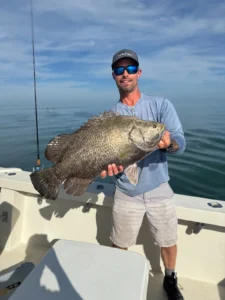
Angler holding a large Tripletail caught off Port Canaveral on a nearshore fishing trip
© 2026 Fin and Fly