
Can You Keep the Fish You Catch in Florida?
October 28, 2026
So, can you keep the fish you catch in Florida? Usually, yes. Before a fish goes in the box, it has to be a species you can legally harvest, in season that day, big enough (or inside the slot), and under the daily count. Some species go back no matter how big they get. That is worth knowing before you book a deep sea fishing trip off Port Canaveral or a Cocoa Beach fishing charter.
On a charter, your captain makes that call at the boat. The answer changes with the species, the date and how far offshore you are, so nobody can promise a yes or no before you leave the dock. On Cape Canaveral fishing charters, the crew sorts it out one fish at a time as each one comes over the rail.
Four Checks Decide Whether a Fish Goes in the Cooler
Every fish gets the same four questions, in the same order.
Is the species open to harvest at all? Some are not, ever, without a special permit. Goliath grouper is the clearest example. Several shark species are fully protected too, including great hammerhead, tiger, lemon and sandbar, which comes up a lot on shark fishing charters.
Is the season open today? Reef species in particular open and close on dates that change year to year.
Does the fish meet the size rule? Sometimes that is a minimum. Other times it is a slot: the fish has to measure between two numbers, and anything shorter or longer goes back.
Are you still under the bag limit? Bag limits count per person. Some species also have a boat limit, and that cap holds no matter how many anglers are aboard.
One detail surprises people. On a for-hire boat, the captain and crew are barred from keeping a bag limit for a long list of species, including mahi, red snapper, gag grouper, snook, redfish and seatrout. The boat’s total take is built from the paying anglers only, not the crew.
Licenses are easy. Fish from a licensed for-hire boat and you are covered. Fin & Fly includes licenses and park permits with every charter, along with everything else listed on the fishing charter prices page.
State Waters and Federal Waters Set Different Limits
Three nautical miles. That is where Florida’s Atlantic state waters end and federal rules take over, and most trips out of Port Canaveral fish both sides of it in a single day.
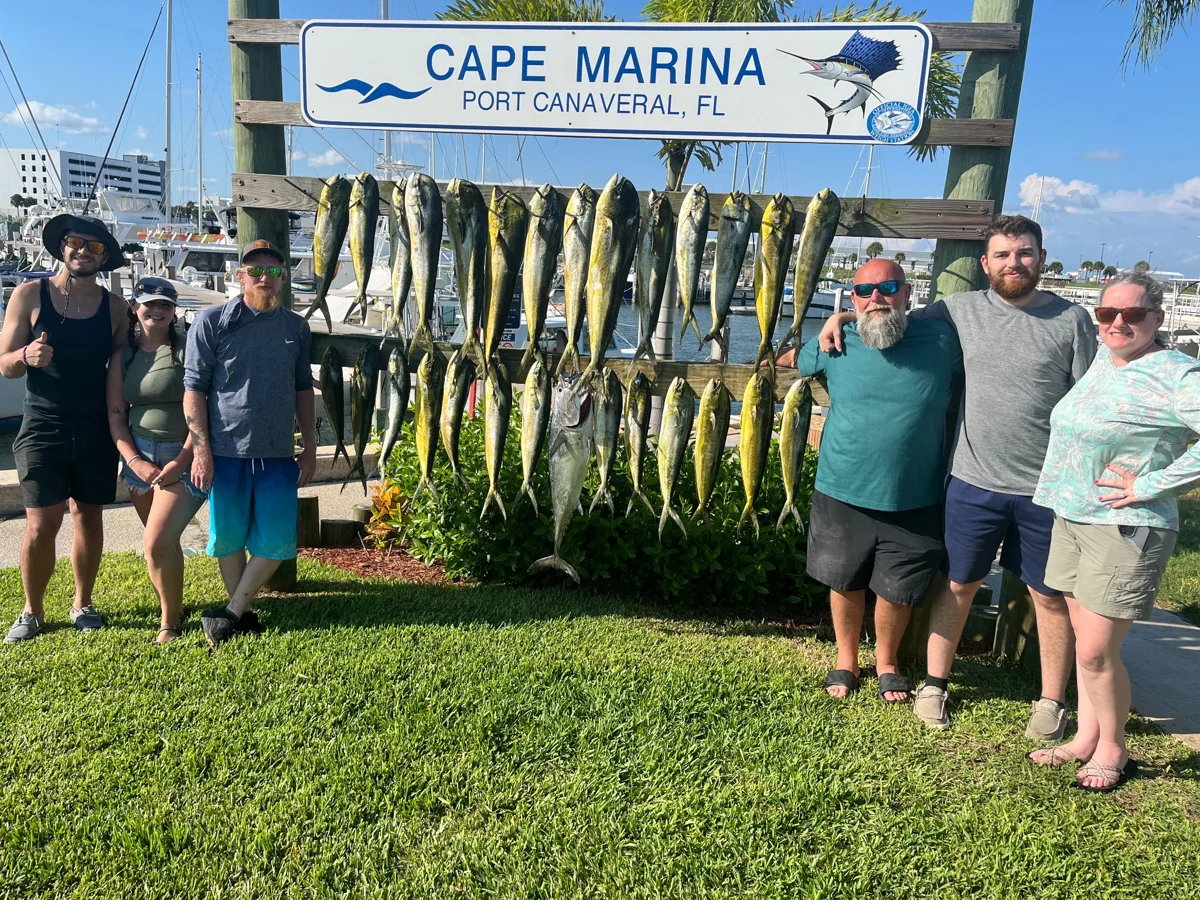
Mahi shows what that means in practice. In Atlantic state waters the limit is 5 per person. Past the three-mile line it rises to 10 per person, capped at 54 fish for the vessel. Both use the same 20 inch minimum, measured to the fork of the tail.
So the number of mahi you can keep depends on where the boat sat when each fish came aboard. If the two rulebooks disagree, the captain follows the one for the water you are fishing in. It is one reason the crew keeps an eye on the boat’s position all day, not only the depth.
2026 Size and Bag Limits for Common Space Coast Catches
These are the saltwater fish size limits most Cocoa Beach guests ask about. Measurements use fork length (FL), total length (TL), or lower jaw fork length (LJFL) for billfish.
| Species | Where | Minimum size | Daily bag limit | Season |
|---|---|---|---|---|
| Mahi-mahi | Atlantic state waters | 20″ FL | 5 per person, crew none | No closed season listed |
| Mahi-mahi | Atlantic federal waters | 20″ FL | 10 per person, 54 per vessel | Open |
| Wahoo | State and federal | None | 2 per person | Open year round |
| King mackerel | Atlantic state waters | 24″ FL | 2 per person | Open year round |
| Cobia | State and federal | 36″ FL | 1 per person or 2 per vessel, whichever is less | Open |
| Blackfin tuna | Florida | None | 2 per person or 10 per vessel, whichever is greater | Open year round |
| Sailfish | State and federal | 63″ LJFL | 1 billfish per person | Open, report within 24 hrs |
| White / blue marlin | State and federal | 66″ / 99″ LJFL | 1 billfish per person | Open, report within 24 hrs |
| Red snapper | Atlantic | None | 1 per person, crew none | Closed (2026 ran Oct 9 to 22) |
| Vermilion snapper | Atlantic | 12″ TL | 5 per person | Open year round |
| Gray snapper | Atlantic | 10″ TL state, 12″ TL federal | 5 state, 10 federal | Open year round |
| Gag grouper | Atlantic | 24″ TL | 1 gag or black per person, 2 per vessel | Closed (reopens May 1) |
| Red grouper | Atlantic | 20″ TL | Up to 3 per person | May 1 to Dec 31 |
| Greater amberjack | Atlantic | 28″ FL | 1 per person | Closed April |
| Goliath grouper | All Florida | n/a | Permit required | n/a |
| Sharks | State waters | None or 54″ FL by species | 1 per person, 2 per vessel | Open |
| Sharks | Federal waters | 54″ FL, hammerheads 78″ | 1 per vessel per trip | Open |
| Redfish | Indian River Lagoon | n/a | Catch and release only | n/a |
| Spotted seatrout | Indian River Lagoon | 15″ to 19″ TL slot | 2 per person | Closed Nov 1 to Dec 31 |
| Snook | Indian River Lagoon | 28″ to 32″ TL slot | 1 per person | Closed Dec 15 to Jan 31, Jun 1 to Aug 31 |
Limits checked against FWC’s recreational saltwater regulations on October 28, 2026. FWC changes rules during the year, so confirm with your captain on trip day.
Mahi, Wahoo, Kingfish and Other Offshore Fish
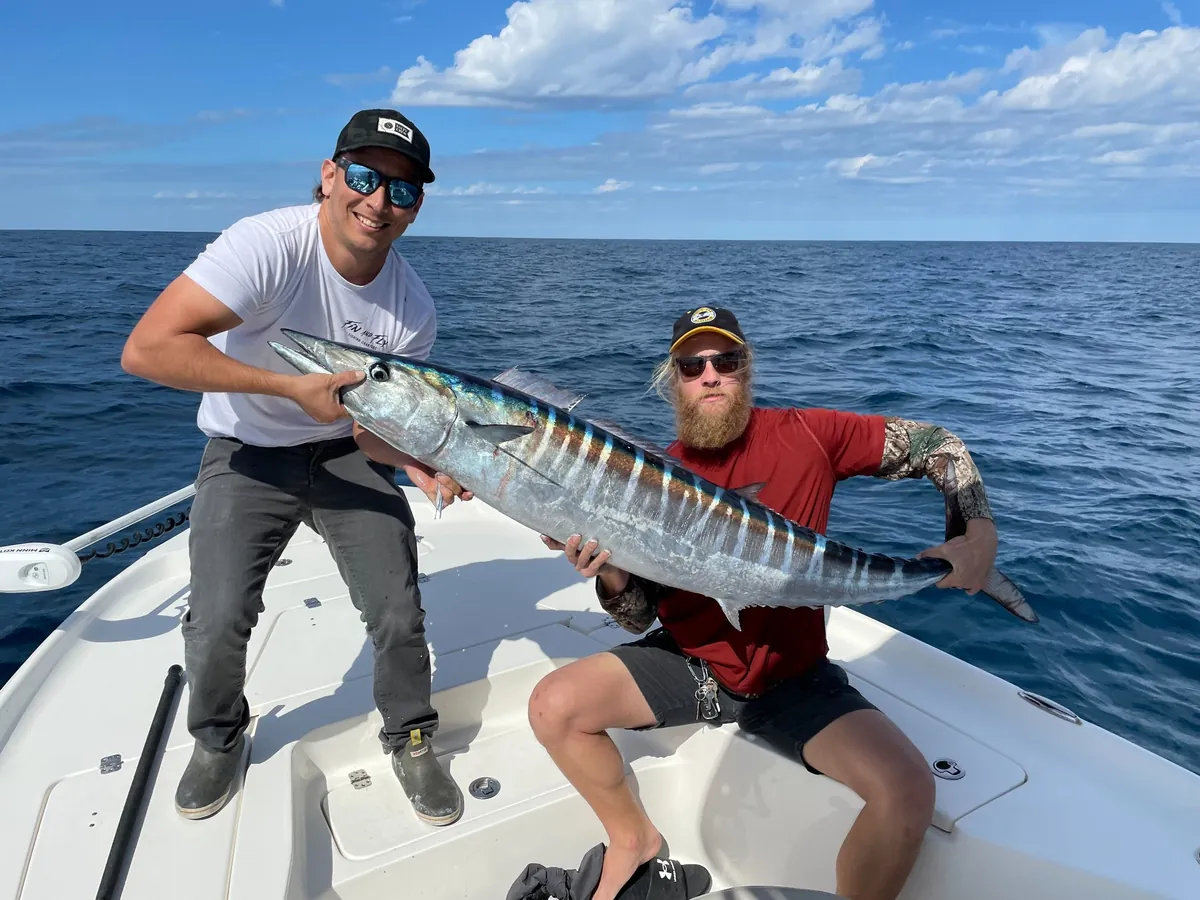
Mahi is the fish most guests ask about. The mahi legal size is 20 inches to the fork, and short fish go back. Wahoo has no minimum, just a 2 fish cap, so the wahoo limit is a count, not a tape measure. Kingfish need 24 inches fork length in Atlantic state waters (more on Cocoa Beach king mackerel fishing). Blackfin tuna has no size rule either. Cobia is the strictest of the group at 36 inches, with no more than 2 leaving the boat regardless of how many people are on it. Full details sit on FWC’s dolphinfish page.
Sailfish and Marlin
Legal to keep, technically. The bar is just very high. Sailfish has to reach 63 inches from the lower jaw to the fork, white marlin 66, blue marlin 99, and you are limited to one billfish per person per day. Anything landed must be reported to NOAA within 24 hours. A sailfish you intend to release cannot be lifted from the water in federal waters, which is why you will see crews unhook billfish boatside. Measurements come from FWC’s billfish and tuna page. Off this coast, most billfish get released, not measured.
Red Snapper, Grouper and Other Reef Fish
Red snapper has no standing season. FWC declares a short one each year, with one fish per person, no minimum size, and no retention by captain or crew. The 2026 season ran 14 days, October 9 to 22, and is now closed. Seasons usually last 2 to 14 days, and Fin & Fly runs red snapper trips only while one is open. Watch FWC’s Atlantic red snapper page for next year’s dates, or read more about the 2026 red snapper season in Cocoa Beach.
Grouper is steadier. The grouper size limit is 24 inches total length for gag and black, 20 for red. Gag closed on August 1 for the year, and red is open through December. New Atlantic rules started October 28, 2026: a boat can now keep only two gag or black grouper combined, and for-hire captains and crew keep none. The amberjack size limit is 28 inches fork length, one per person, closed for the month of April. Goliath grouper stays in the water without a permit.
Sharks
State waters allow one shark per person and two per boat. Blacktip, blacknose, finetooth, Atlantic sharpnose and bonnethead have no minimum size. Bull, nurse and spinner need 54 inches fork length. A long list of other sharks is fully protected at any size. Federal waters tighten it to one large shark per boat per trip. Check FWC’s shark regulations for the current species lists.
Fin & Fly shark trips bring up blacktip, spinner, bull, bonnethead, Atlantic sharpnose, blacknose, finetooth, tiger, sand tiger, great hammerhead, scalloped hammerhead, lemon and sandbar sharks. Only the first seven can be kept, and bull and spinner have to measure at least 54 inches fork length. The other six (tiger, sand tiger, both hammerheads, lemon and sandbar) are fully protected in Florida. They stay in the water and get released. For which species swim close to shore, see are there sharks at Cocoa Beach.
Redfish, Trout and Snook in the Lagoon
Cocoa Beach’s lagoons fall inside FWC’s Indian River Lagoon region, and it has its own rules, which matter most on inshore fishing charters. Redfish there is catch and release, full stop. Spotted seatrout sits in a 15 to 19 inch slot at 2 per person, closed through November and December. Snook runs a 28 to 32 inch slot, one per person, with two closed stretches across the year.
Measuring, Releasing and Taking Your Catch Home
An inch decides a lot out here.
Most limits use fork length, measured from the snout to the fork of the tail. Others use total length, snout to the tip of the tail with the lobes squeezed together. Billfish use lower jaw fork length. The crew handles the measuring, on a bump board, before anything goes in the box. FWC’s measurement guide shows the difference.
Mahi and wahoo have one extra rule worth knowing: both have to reach the dock with head and fins still attached. No filleting on the ride in.
Releases happen fast. Prohibited sharks stay in the water and get cut loose at the boat. Reef fish brought up from depth sometimes need a descending device to get back down safely.
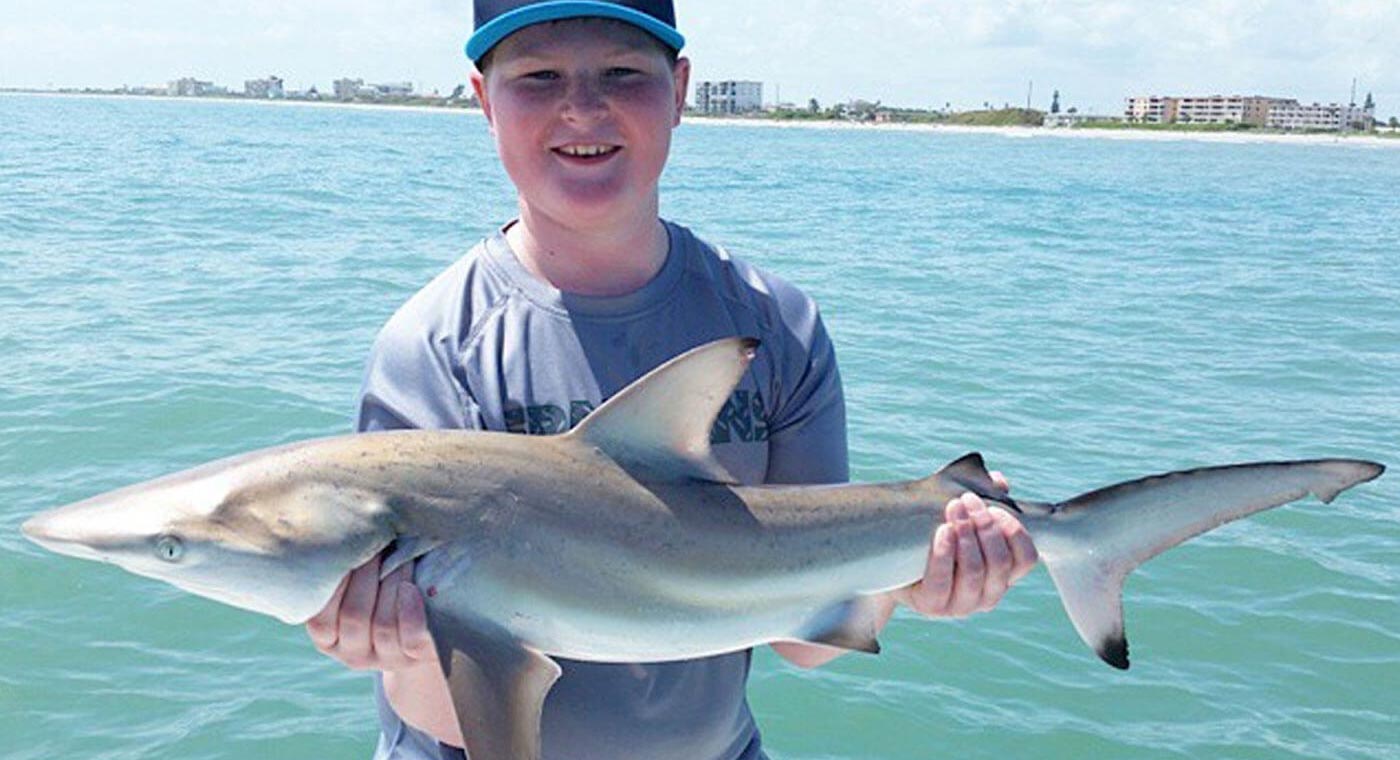
Every Fin & Fly trip includes a cooler with ice and photos of your catch, so legal fish come off the boat packed and ready for the drive. Once you are home, there are simple ways to cook your catch that suit most of what comes off this coast.

Frequently Asked Questions
What happens if you catch a fish that cannot be kept?
It goes back, usually without leaving the water. The crew unhooks it at the boat and lets it swim off. Prohibited sharks are cut loose fast instead of being hauled aboard for a photo. Reef fish from deep water may go down on a descending device so they can recover.
Who decides whether a fish gets kept or released?
Your captain. The four checks take a few seconds on deck, and the call covers species, date, size and how many of that fish are already in the box. You do not have to keep track of any of it.
Do you need a fishing license to keep fish on a charter?
No. A licensed for-hire vessel covers everyone fishing aboard, and Fin & Fly’s charters include licenses and park permits. Fishing from shore, a pier or your own boat is different. You need your own license for those.
Can you take your catch home on a flight?
Usually, yes. Pack it as checked baggage in a sealed cooler. Each airline has its own packing and weight rules, so call yours before the trip. Plenty of visitors on Orlando fishing charters just drive their catch home.
What should you ask your captain before the trip about keeping fish?
Ask what is in season on your date, whether the crew cleans and fillets, and whether the boat releases anything the law would let you keep. Those three answers tell you what to expect at the dock.
Next Steps for Charter Guests
Pick the two or three species your group wants most, then check whether each season is open on your trip date.
Look up current limits on FWC’s recreational regulations page the week you fish. Reef species can change on short notice.
Ask your captain how the boat handles keeping, cleaning and releasing.
Driving home with fish? Bring a cooler. Still choosing a trip? Compare boats and trip lengths.
Species, season, size and count. Your captain tracks all four, so your day goes to fishing instead of reading rulebooks. Knowing roughly where the limits sit before you board just makes the talk at the dock quicker.